Roundabouts can feel a little strange at first. One lane, then two, cars moving in a circle, and everyone seems to know what to do except you. That is a common feeling. Many new drivers ask about roundabout rules in Ontario, Ontario roundabout laws, roundabout driving Canada, and how to use roundabout before they ever try one. Understanding roundabout rules in Ontario is important because these intersections work differently from normal traffic lights. In this blog, you will learn about the right of way, basic roundabout lane rules, how a two-lane roundabout works, and a few simple roundabout safety tips. There is also a bit about the G2 test roundabout, because that is where many learners start paying close attention.
What Is a Roundabout?
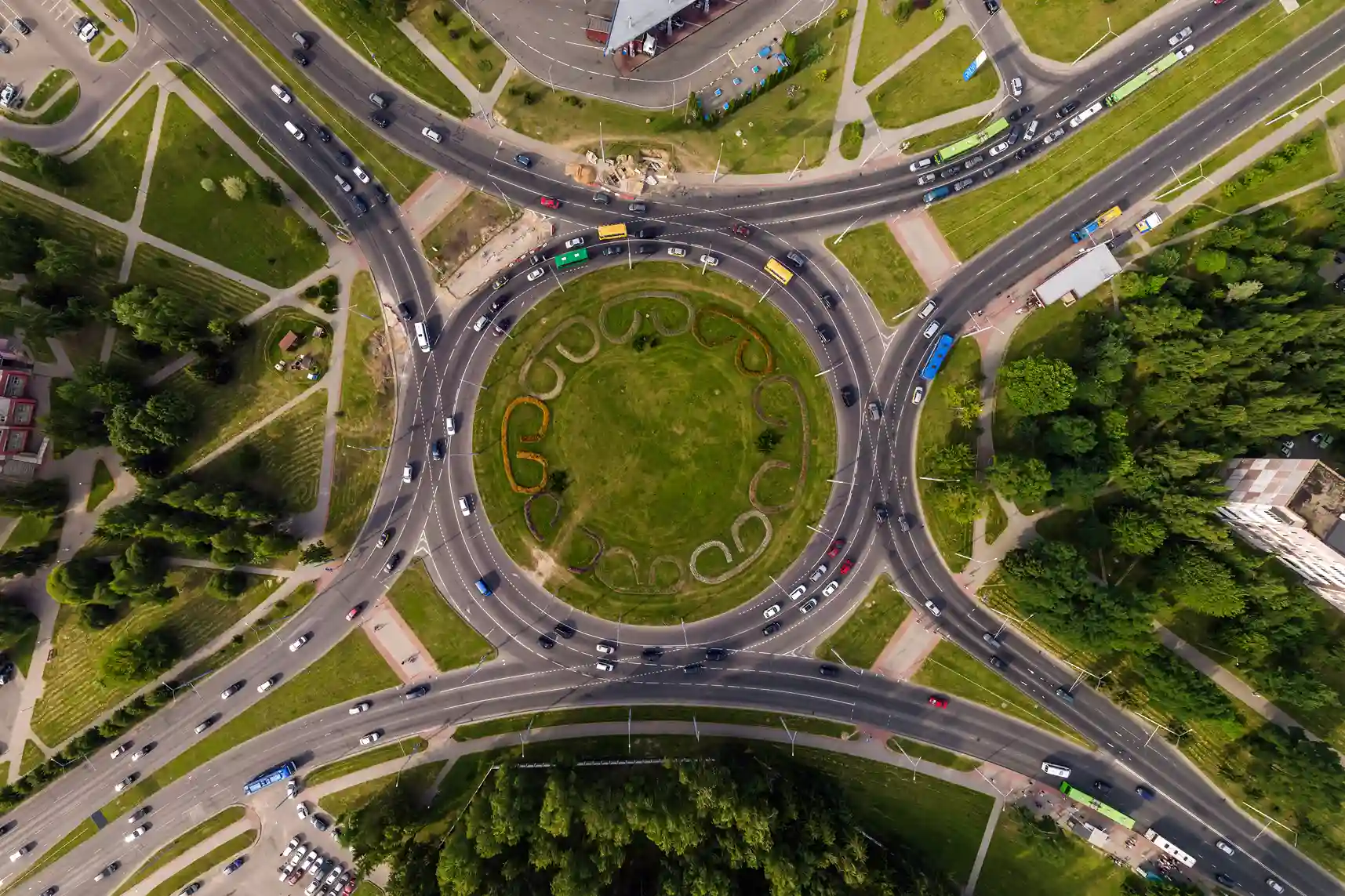
A roundabout is a circular intersection. Traffic moves around a center island in one direction. In Ontario, that means counter-clockwise. No traffic light sitting there telling you when to go. You look, you wait, and then you move when it is clear. That is the whole idea. The main rule is simple. Vehicles already inside the roundabout go first. If you are entering, you yield. The roundabout yield sign is there to remind you of that, but the sign is only part of it. You still need to watch traffic with your own eyes. Some roundabouts are small and simple. Others have two lanes and can look messy at first glance. Still the same basic idea underneath.
Why Ontario Uses More Roundabouts
Ontario uses more roundabouts now because they help traffic move better in many places. A lot of intersections get busy, and lights can create long waits. A roundabout usually keeps cars rolling at a lower speed instead. That can feel odd the first time, but it often works well. They are also used because they can cut down on serious crashes. A roundabout changes the way vehicles meet each other. Instead of straight-on conflict, traffic is guided around the circle. That reduces some of the worst kinds of collisions. It changes the risk in a better direction.
How Roundabout Rules Ontario Work in Real Driving Situations
Roundabout rules Ontario work in a very direct way. There are no traffic lights in most cases. Cars move around the circle, and drivers entering wait for a safe opening. That is really the heart of it. The system is built to keep traffic moving without the start-stop feel of a signal light.
Traffic Moves Counter-Clockwise
All vehicles move counter-clockwise around the center island. That direction matters. It keeps traffic organized and prevents people from meeting head-on in the middle. You go around until you reach your exit. Nothing complicated, but it does need attention. If you enter half-thinking about something else, it gets confusing fast. The turn feels short in some roundabouts and a little longer in others. That depends on the size of the road, the lanes, and how many exits there are. Either way, the path is still the same. Around the center. Then out.
Right-of-Way Rules in Roundabout Rules Ontario
The roundabout right-of-way rule is one of the main things to remember. Vehicles already inside the roundabout have priority. If you are entering, you yield to them. You also look left because that is where traffic usually comes from as you wait. Do not try to squeeze in just because it looks like a tiny opening. That is how people get into trouble. Yielding does not always mean hard braking. Sometimes you slow down and keep rolling because the lane is clear. Other times you need to wait a little longer. The point is simple. Do not force your way in. These are the basic roundabout rules Ontario drivers must follow to avoid confusion and keep traffic moving safely
Roundabouts Keep Traffic Moving
Roundabouts help traffic move without full stops all the time. That is one reason people like them. A car can enter when the opening is safe, keep moving through the circle, and leave without sitting under a light. It feels more fluid once you understand it. The speed is usually lower, too. That helps. Slower traffic gives drivers a better chance to react. If someone makes a small mistake, the lower speed often leaves more room to fix it. Not perfect. Just better than a fast intersection with everyone trying to rush.
Signs and Lane Markings in Roundabout Rules Ontario
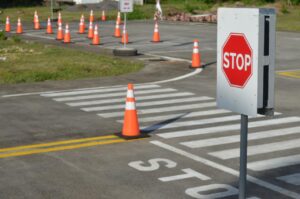
Signs and lane markings do a lot of the work before you even enter. They tell you which lane to take and where each lane goes. That matters a lot in a two-lane roundabout. You cannot just wing it and hope for the best. The arrows on the road and the signs near the approach give you the plan. That is where roundabout lane rules come in. A sign may show one lane for right turns and straight movement, and another lane for left turns or U-turns. Sometimes the layout is a little different. You need to read the road in front of you, not guess from memory. Ontario roundabout laws depend on the setup, so the markings matter.
Pedestrian Safety at Roundabouts
Pedestrian crosswalks are usually placed near the entry or exit, not right in the middle of the circle. That helps keep things simpler. Drivers still need to slow down, because people may be crossing when you are entering or leaving. It is not a place to stare only at cars. You still need to watch the edge of the road. Cyclists can also be nearby. They may be moving through the same area or crossing at a marked point. So yes, even if the roundabout looks clear from far away, you still check. Near the exits, especially, people can appear very suddenly.
How to Navigate a Roundabout Safely
A roundabout is easier when you split it into three stages. First, you approach. Then you drive inside. Then you leave. That is the basic shape of it. Most of the stress comes from trying to do all three at once.
Stage 1- Approaching and Entering
Slow Down
As you come near the roundabout, slow down early. Not at the last second. Do it early. That gives you time to see the signs, the cars, the lane arrows, and the people at the crosswalk. A lot of mistakes happen because a driver comes in too quickly and only starts looking when it is already too late. In winter, this gets even more important. Ontario roads can be slippery, and stopping distances change. A roundabout is not the place to rush through on a snowy day. Keep it calm and simple.
Choose Lane Early
Lane choice should happen before you enter. For many roundabouts, the right lane is used for a right turn or going straight. The left lane is often used for a left turn, a U-turn, or sometimes going straight too, depending on the road. That part can vary. That is why the signs matter so much. If you wait too long and then change your mind, things get messy. Other drivers are already watching your lane position. A late switch in a G2 test roundabout can look bad fast. So pick the lane before you get there, then stay with it.
Yield to Traffic
This is the part people ask about most. The answer stays the same. Vehicles already inside the roundabout go first. You yield to them. Look left. Watch for a gap. If there is no gap, wait. Simple as that. You do not need to stop every time. If the road is clear, you keep moving in a smooth way. But if traffic is coming, you wait. You do not push into the circle beside another car. That is not the move.
Enter Safely
When the gap opens, enter with steady control. Not a hard push, not a nervous crawl either. Just smooth. Keep an eye out for bigger vehicles too. A truck may take up more space than you expect. Some roundabouts give them more room, but you still need to stay alert. A shaky entry can throw off the whole trip through the circle. So once you go in, keep your focus. Do not overthink every second. Just keep the motion steady.
Stage 2- Inside the Roundabout
Stay in Lane
Once you are inside, stay in your lane. Do not move across lanes in the middle unless the roundabout design clearly allows it and you know exactly what you are doing. Most of the time, changing lanes inside is just a bad idea. It confuses other drivers and makes the space feel tighter than it already is. In a two-lane roundabout, this matters even more. The lanes are there for a reason. Pick one and stay with it. That keeps your path clear and your mind less busy.
Maintain Movement
Keep moving at a steady, low speed. You do not want to stop in the circle unless there is danger in front of you. The whole point of the roundabout is movement. Not speed, but movement. There is a difference. If you brake hard for no reason, the car behind you may not expect it. If you stop for no reason, the whole flow gets awkward. So keep it smooth. Not fast. Just smooth.
No Overtaking
Do not pass other vehicles inside the roundabout. There is not enough room for that kind of thing, and it can turn ugly very quickly. People sometimes get impatient when they are stuck behind a slower car. That does not change the rule. You stay behind and wait for your turn. A roundabout is not a place to squeeze through because you think you can make it. That thought usually ends badly.
Watch All Road Users
Keep watching the road around you, not only the car in front. Pedestrians may be near the exit. Cyclists may be waiting or crossing. Motorcycles can be smaller and easier to miss. Trucks may need extra room and can look like they are taking more of the lane than you expected. They usually are. The point is not to stare at everything at once. That would be too much. Just keep your eyes moving and stay aware. That helps more than panic ever will.
Stage 3- Exiting
Signal Before Exit
Use your right signal before you leave the roundabout. Not too early, not too late. The signal tells others what you plan to do. Drivers behind you notice it. Pedestrians near the exit notice it. That little blink matters. Some drivers forget this because they think the roundabout itself already makes the movement obvious. It does not always. A signal clears it up.
Check Crosswalks
Before you exit, check the crosswalk area. Pedestrians may be there. Cyclists too. You need to be ready to stop if someone is crossing. The exit is one of the most common places for people to step into view. Do not rush out just because you are almost done. That is the moment to stay wise.
If You Miss Exit
If you miss your exit, keep going. Do not reverse. Do not stop in the middle and try to fix it. Just circle around again and take the next chance. It happens to beginners all the time, and even confident drivers mess it up sometimes. Missing an exit is not the end of the world. Staying calm after it happens is what matters.
How to Use Two-Lane Roundabouts
A two-lane roundabout needs extra care because there is more than one path and more than one set of cars around you. That means more attention, not more panic. The signs and lane arrows should guide you. Read them early. Pick the lane that matches your exit. Then keep that lane. Do not drift beside a large truck unless you have to. Trucks may need more turning space and can use both lanes while they move through. That can look strange, but it is normal. Your job is to give them room and stay aware of what they are doing. If you are on a G2 test roundabout, this is one of the places where examiners watch closely. They want to see calm lane use and safe decisions, not nervous last-second changes.
Conclusion
Roundabouts may look awkward at first, and that is fine. Most people need a little practice before they feel relaxed. Once the rules make sense, it gets easier. Slow down. Yield properly. Choose the right lane early. Stay in your lane. Signal before you exit. That is most of the job right there. For beginners, and especially anyone preparing with Growing Star Driving School, this is one of those skills that starts small and gets better quickly. Following roundabout rules Ontario consistently makes driving smoother and helps new drivers build confidence quickly.
Who has the right of way in a roundabout in Ontario?
The vehicles already inside the roundabout go first. If you are entering, you wait until there is a clear gap. That is the main rule. Simple, but very important.
What should I do if I miss my exit in a roundabout?
Just keep going around again. Do not stop or reverse. You will come back to your exit naturally on the next turn.
Why do new drivers find roundabouts confusing?
Mostly because everything moves at the same time. There are no traffic lights telling you when to go. You have to watch traffic, pick a lane, and decide timing on your own. It feels fast at first, but it becomes normal with practice.
Do you have to stop before entering a roundabout?
Not always. You only stop if traffic inside is coming and there is no safe gap. If the way is clear, you just slow down and enter smoothly.