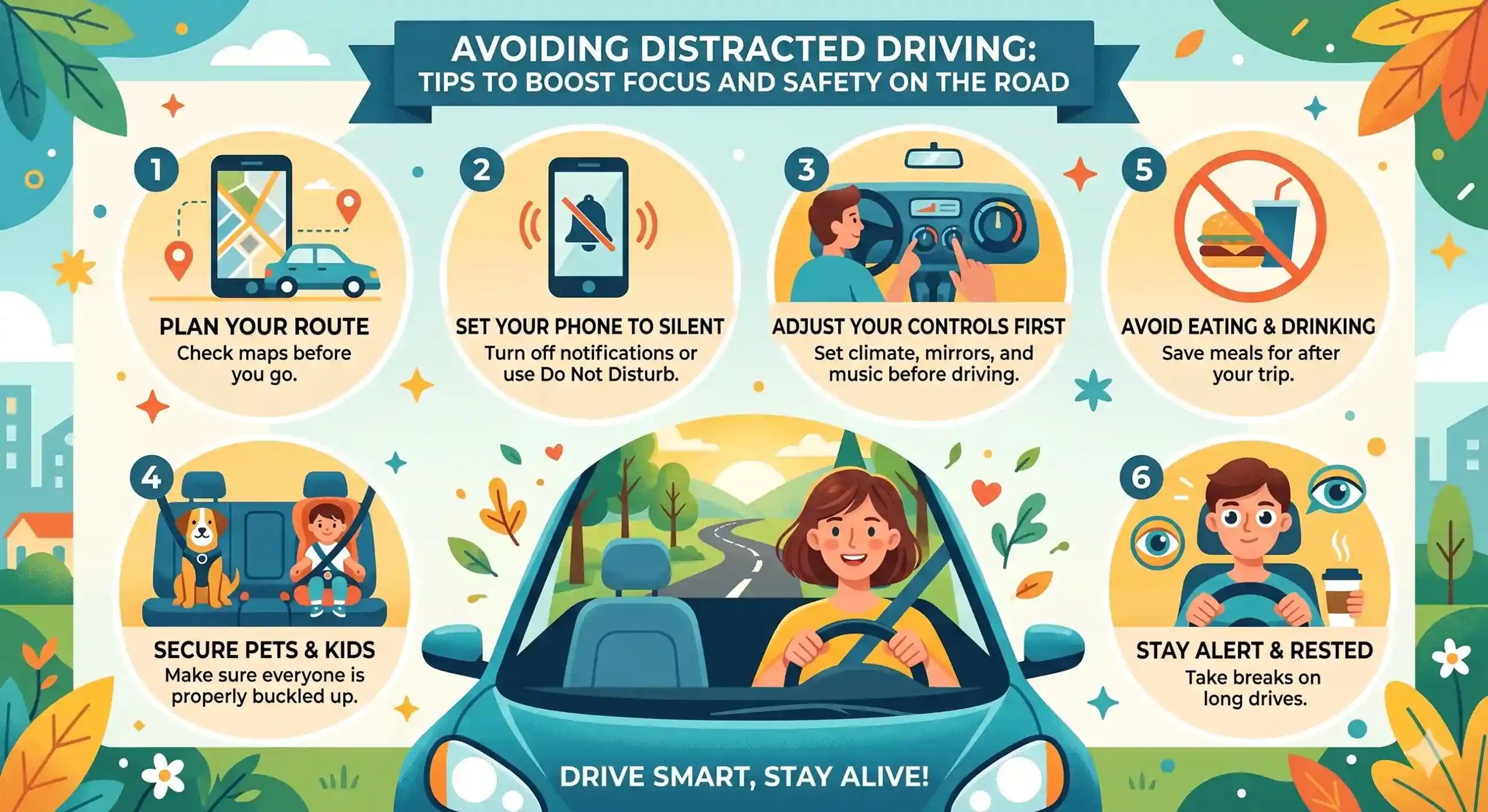
A lot of bad driving starts with one tiny look away. A phone buzzes. A map needs a quick check. Someone in the car asks a question. That is how focus slips. In Canada, distracted driving is still one of the biggest causes of crashes, injuries, and deaths on the road, and CAA says it accounts for 22.5% – 25.5% of fatal collisions. Transport Canada also warns drivers to keep the phone out of reach, even at a traffic light. For anyone in a driving school or taking driving lessons for beginners, this is one habit worth learning early.
What Distracted Driving Really Means
Distracted driving is not only texting. It also includes thinking too much about something else, trying to do more than one thing at once, or simply drifting off for a moment. That can happen in a driving academy car, in a family car, anywhere. A driving teacher will often see this early, because new drivers can focus too hard on the road ahead and still miss what is happening around them. Safe driving starts with full attention, not half attention. This is why it matters so much for a driving course to teach focus from the first day.
Types of Distraction While Driving
1. Visual distraction (looking away from the road)
This is when the eyes leave the road, even for a short time. It can be a phone screen, a GPS map, or even the dashboard. The problem is simple: the road keeps changing while your eyes are somewhere else. A car in front may slow down, a light may change, or a person may step out.
2. Manual distraction (hands off the steering wheel)
This happens when the hands leave the wheel. Eating, drinking, reaching for a bag, or touching controls can all do it. It sounds small. But it is not. Even one hand off the wheel can make a sudden move harder.
3. Mental distraction (mind not focused on driving)
This one is easy to miss. The driver is looking ahead, hands are in place, but the mind is somewhere else. Stress can do it. Daydreaming can do it too. That is the kind of distraction that slips in quietly and stays longer than people think.
Tips to Boost Focus While Driving
1. Put Your Phone Away Before Driving
Use Driving Mode or Silent Notifications
Turn on Do Not Disturb while driving, or use the phone’s driving mode if it has one. The point is to cut the noise before it starts. Fewer alerts mean fewer reasons to reach down. CAA South Central Ontario recommends setting the phone on Do Not Disturb before you drive.
Keep Phone Out of Reach
Put it in a bag or the glove box. Not beside you or on your lap. Transport Canada says to keep the phone out of reach, even when stopped in traffic. That one step removes a lot of temptation.
2. Set Up GPS, Music, and Car Controls Before Driving
Prepare Navigation Early
Set the route before the car moves. Check the turns, then start. That way, there is no need to tap around while driving. CAA also advises drivers to handle distractions before leaving whenever possible.
Adjust Car Settings in Advance
Fix the mirrors. Set the seat. Choose the music. Adjust the climate. It takes a minute or two, and it saves a lot of little interruptions later. It is the kind of habit a driving course should build early.
3. Avoid Multitasking While Driving
No Eating or Searching for Items
Keep your focus on the road, not on the snack, the bag, or the floor. The safest drive is the one where the driver is doing one thing only. CAA and RCMP both warn against these kinds of distractions.
Keep Both Hands on the Steering Wheel
This gives better control and faster response when something changes suddenly. It sounds basic because it is basic. But basic habits save trouble.
4. Take Breaks During Long Drives
Prevent Fatigue
Long drives can wear down focus. Even a short stop can help a driver reset. A few quiet minutes, some water, a stretch, and then back on the road.
Stay Alert on Highways
Highways can feel steady, which is part of the problem. The mind starts to drift. A short break helps pull attention back. This is one place where a defensive driving course or driver improvement course can be useful, because both usually push the same idea: stay aware before the mistake happens.
Distracted Driving Laws and Safety Rules in Canada
Handheld phone use is illegal across Canada in many forms, and using a phone while stopped at a red light can still be a problem. The CAA law page notes that being caught can lead to fines and licence suspensions, and Ontario’s official guidance says a first conviction can bring demerit points and a suspension. Ontario’s rules also point to a minimum total payable fine of $615 for a first offence, along with three demerit points and a three-day suspension.
For beginners, this matters even more. Good driving instructor training should build these habits early. People comparing driving instructor course costs often look at price first, but the real value is safer driving later. That is where a driving school, a driving academy, or a solid driving instructor course can make a difference.
Helpful Tools and Safe Driving Support
Some tools help drivers stay off the phone instead of pulling them back to it. Apps like Safe 2 Save, LifeSaver, OnMyWay, and DriveSafe.ly are examples of that idea. They are not magic. They just make distractions harder to give in to.
A driving teacher can also keep the lesson simple and real. A defensive driving course or driver improvement course can help learners build better habits, especially if distraction is a weak spot already. Growing Star Driving School can be part of that same steady start.
Conclusion
Distracted driving usually starts small. That is what makes it tricky. One quick look, reach, or thought that drifts away. The fix is simple, even if it takes practice: put the phone away, set things before you move, and stay mentally on the road. Growing Star Driving School gives tips to people in Canada to boost their focus and safety on roads.
What is distracted driving for beginners?
It is any driving where the mind, eyes, or hands are not fully on the road.
Is phone use allowed during driving lessons?
It should not be. The lesson is the place to build phone-free habits.